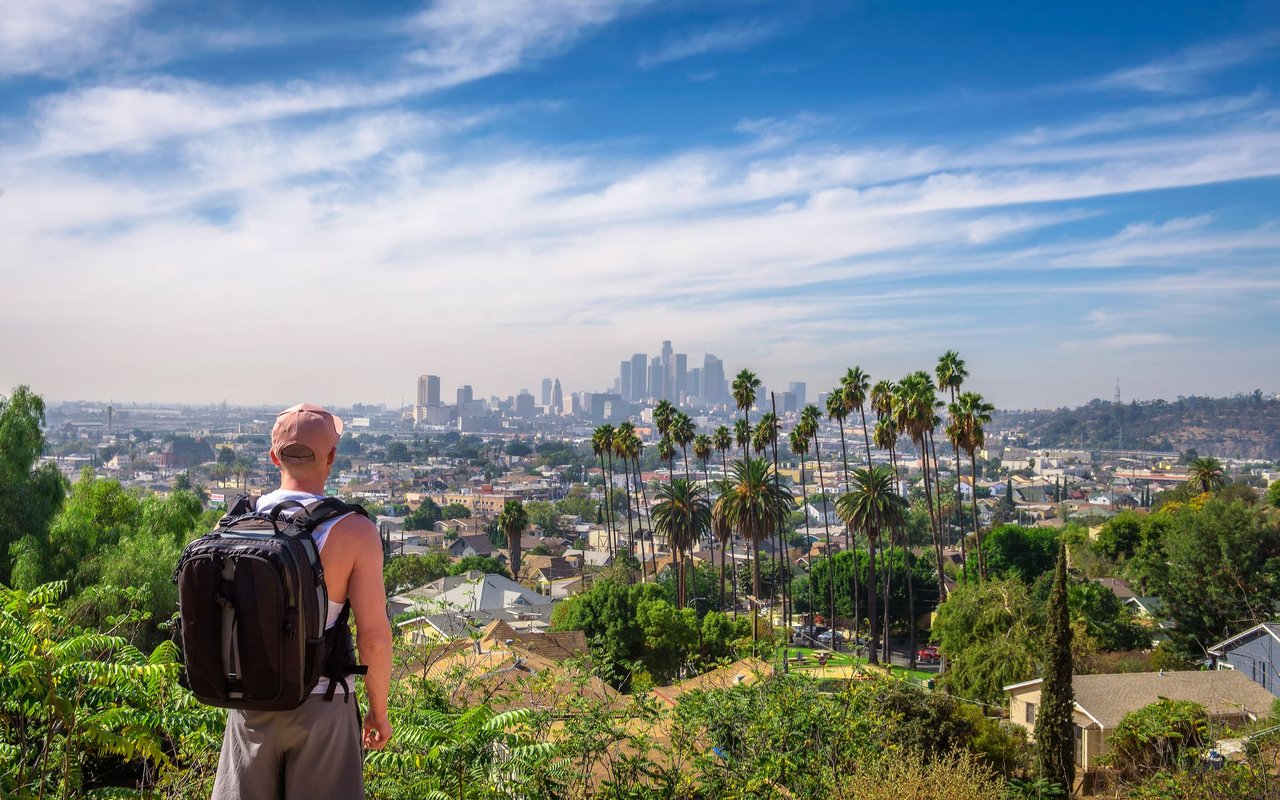
Walk the corner of Maryland and Wilson on any ordinary Tuesday and you will pass a plain marquee, a validated parking garage across the street, and a steady trickle of people buying tickets to whatever is playing that week. Nothing about the block announces that for six nights every September, this same theater becomes the center of an event that FilmFreeway has ranked among the Top 100 Best Reviewed Festivals in the world. No red carpet spills onto Wilson Avenue. No blocked traffic on Brand. If you didn't already know the Glendale International Film Festival was running, you would have no reason to notice.
That gap between scale and reputation is the whole story of GIFF, and it says something true about Glendale itself: this is a city that makes movies for a living and treats the festival celebrating that fact like a neighborhood potluck, not a premiere.
A Company Town That Doesn't Act Like One
Glendale is home to DreamWorks Animation's global headquarters and to the Walt Disney Company's Grand Central Creative Campus, two of the more consequential addresses in American animation. That is not incidental trivia. It means a meaningful share of the people who made the movie you watched last weekend clock in a few miles from Brand Boulevard.
You would expect a company town like that to throw itself a loud festival. Instead, GIFF runs out of a nonprofit called Glendale Arts, founded in 2008, operating on a scale small enough that its full six-day footprint fits inside a few walkable blocks downtown. The contrast is the point. The industry here is enormous. The way the city celebrates it is not.
Six Nights, One Screen
GIFF's 2026 edition, its twelfth, runs September 23 through 28. Every in-competition screening happens at the Laemmle Glendale, a single-screen art house at 207 N. Maryland Avenue, on the northwest corner of Maryland and Wilson, one block east of Brand. It is not the AMC Americana at Brand 18 a few blocks away, the eighteen-screen multiplex most people default to when they think "the movie theater in Glendale." The festival could screen there. It doesn't. Everything in-competition plays on the Laemmle's one screen instead, which means the festival's entire physical footprint for a week is a single storefront theater and a couple of nearby rooms.
If you're planning to catch a screening, the theater validates parking at The Exchange Parking Garage on North Artsakh Avenue, just south across Wilson. City Lots 3 and 4 sit about half a block north on Maryland if the garage fills, and there's metered street parking scattered along Wilson and the surrounding blocks for anyone willing to circle once.
What Actually Happens Each Night
The festival's structure this year follows a rhythm that's stayed fairly consistent in recent editions:
- Opening Night kicks off with a party at MYA Rooftop at The Glenmark Hotel, described on the festival's own schedule as a golden hour affair, before screenings begin the following day.
- Screening days run block after block of features, documentaries, and shorts at the Laemmle, with Q&As and panel discussions built into the schedule between shows.
- The Festival Lounge at ace/121 Gallery opens for extended hours on the middle days of the festival, functioning as the informal gathering spot between screenings.
- A panel on women directors, featuring the founders of the GenXX initiative, is part of this year's programming, a discussion on the barriers GenX-generation women directors have faced getting their shot in an industry built around them but not always for them.
- Awards Night, the closing event, lands on Monday, September 28, capping the six days with a ceremony recognizing the best feature, documentary, and short film categories, along with screenplay and student awards.
None of this requires a car once you've parked. The opening party, the screenings, the lounge, and the closing ceremony all sit within a few minutes of each other on foot, which is unusual for a Los Angeles-area event of any size.
A Festival That Grew Up Small on Purpose
GIFF started in 2014 as a three-night showcase, the kind of thing a single determined founder puts together with volunteers and borrowed screens. That founder was Velvet Rhodes, an actress, writer, producer, and director who built the festival around discovering filmmakers rather than servicing an industry that already had plenty of platforms for its established names. By 2016 it had already stretched to eight days. Rhodes ran it until her passing in 2020, and Glendale Arts took over producing duties in 2022, settling the festival into the six-night format it runs today.
That history matters because it explains why GIFF still feels handmade rather than corporate, even as its reputation has grown. It was built by one person trying to give local and emerging filmmakers a real screen and a real audience, and the nonprofit that inherited it kept that same shape rather than scaling it into something unrecognizable. A festival that started as three nights of borrowed goodwill is now internationally ranked, and it still fits inside one city block.
Dinner Before the Lights Go Down
If you're heading to a screening this month, downtown Glendale gives you options within easy walking distance of the Laemmle. Carousel, on a prominent corner of Brand Boulevard, has anchored the strip for years with a Lebanese-influenced menu built around mezze platters designed for sharing before a show. A few blocks over on Artsakh Avenue, Greek Bistro offers a more contemporary space if you want something lighter before sitting down for two hours. And if you're looking to close out the night after Awards Night the way anyone would after a long week of screenings, Oak and Vine's barrel-aged cocktails and charcuterie boards make for a quieter landing spot than trying to find parking somewhere new.
None of this requires planning a special trip. It's dinner on the way to a movie, in a part of Glendale most residents already pass through weekly.
The Quiet Version of a Company Town
What GIFF ultimately proves about Glendale is that the city's relationship to the entertainment industry isn't performative. A place that actually made its living off the industry for decades doesn't need to throw a spectacle to prove it belongs in that conversation. It can let its festival stay exactly the size it needs to be: one theater, six nights, a rooftop party, and a gallery lounge, all within walking distance of dinner on Brand.
If you already live here, this is the week to actually notice the marquee on Maryland instead of walking past it. And if you're the kind of person who finds a neighborhood's real character in details like this rather than in a listing photo, I'd love to talk about what else Northeast LA has to offer. I'm Maureen Pearson, and Let's Connect.