Two restaurants opened within a few blocks of each other in Silver Lake on March 11. One had 42 seats a night and wouldn't tell you where dinner was happening until you'd already paid for it. The other had 34 seats, served family-style Dominican food, and posted its address the week it opened. Both made the local food press that week. Only one of them was ever built for you to actually walk into.
If you live here and walk the Reservoir Loop on any kind of schedule, you already know which one changed your Tuesday night. This is the story of why the quieter opening mattered more than the one that got the headlines.
Two Openings, One Week, Two Different Bets
The loud one was Noma. The Copenhagen restaurant, three Michelin stars and named the world's best restaurant five times over its history, set up a 16-week residency at a private estate in Silver Lake, address revealed only to guests who had already booked. Reservations opened January 26 at 9 a.m., and you needed to have signed up for the restaurant's newsletter by January 23 just to get the booking link. The tasting menu ran $1,500 a person. The residency ran through June 26.
The quiet one was Amiguita, chef Alejandro Eusebio's tribute to the Dominican food he grew up on, mentored by chefs Douglas Rodriguez and Alex García. It opened the same week, a few blocks off Sunset in the former Ruby Fruit space at 3510 W. Sunset Blvd, seating 34 people who could show up, put their name in, and eat.
Both stories ran in the same news cycle. Only one of them was ever a restaurant a Silver Lake resident could reasonably plan a Tuesday around.
The Seats That Existed Versus the Seats You Could Get
Here's the arithmetic worth sitting with. Noma served dinner four nights a week, Tuesday through Friday, with midday service added on Wednesdays and Fridays, at 42 covers a night for the regular evening seatings. Across the full 16-week run, that's room for roughly 2,700 meals at full capacity. Silver Lake, depending on how you draw the boundary, is a neighborhood of tens of thousands of people. The ceiling on who could eat there was set months before the residency began, and it was set low on purpose.
That's not a criticism of the restaurant. A five-month residency that flew in more than 130 staff members from Copenhagen, and covered housing and in some cases schooling for their kids, was never going to run like a neighborhood trattoria. It's a fact about what the residency was structurally capable of doing for the people who live two blocks from where it happened, which was very little, on purpose, by design.
The Part That Was Supposed to Leave in June
The detail that got less attention at the time: alongside the dinner residency, Noma opened a retail shop on Sunset Row in April, selling the brand's fermented goods, garums, and coffee. When it opened, reporting on the shop listed Thursday-through-Sunday hours and an expected departure date in June, the same month the dinner residency wrapped.
June came and went. The dinner service ended on schedule. The shop did not leave with it. What's still standing on Sunset Row is a Noma Projects retail shop, the brand's first standalone retail space outside Denmark, open to anyone who walks in and wants to buy a bottle of the same garum that international press spent a season writing about. No reservation. No newsletter signup. No 9 a.m. scramble in January.
The exclusive half of the Noma story left when it said it would. The half built for foot traffic didn't.
The Building That Used to Fix Cars
None of this had anywhere to land without Sunset Row, and Sunset Row itself took years to become the place a shop like that could stay open.
The site at 3210 and 3300 Sunset Blvd sat as an abandoned 1930s auto body shop before downtown-based developer RYDA, led by principal Ryan Neman, brought in Abramson Architects to convert it into a roughly 19,100-square-foot mixed-use project. The shell was finished in November, and the buildout of individual storefronts stretched across the following two years. Retail leased up first, with New Balance, Malin + Goetz, Veo Optics, and Baggu opening as tenants finished their spaces. The restaurants came on a longer runway, and this year is when that second wave finally became visible from the sidewalk: BAR di Bello, Amiguita, BOBO Thai, and Loquat for coffee.
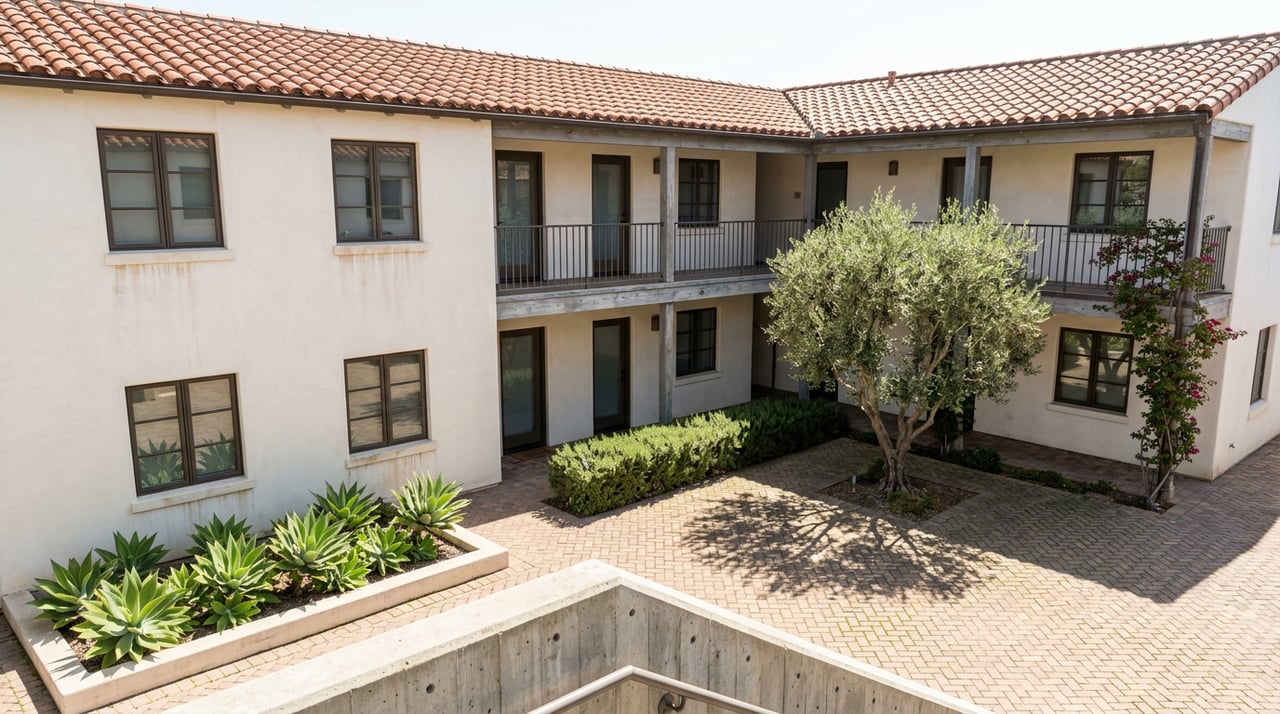
The architects kept the building's bones on purpose. The bow truss ceilings and Art Deco facade stayed, and the wide bays built for cars to pull through became the frame for the project's storefronts, bridged by a 6,500-square-foot courtyard meant to blur the line between the sidewalk and the shops. Abramson partner Marco Marraccini put it plainly to the Los Angeles Business Journal:
"They're really driven to come to these neighborhoods and find an opportunity to upcycle a building."
That's the version of Silver Lake's growth that doesn't make international news. Nobody flew in from Copenhagen for it.
What This Adds to a Loop That Didn't Need Saving
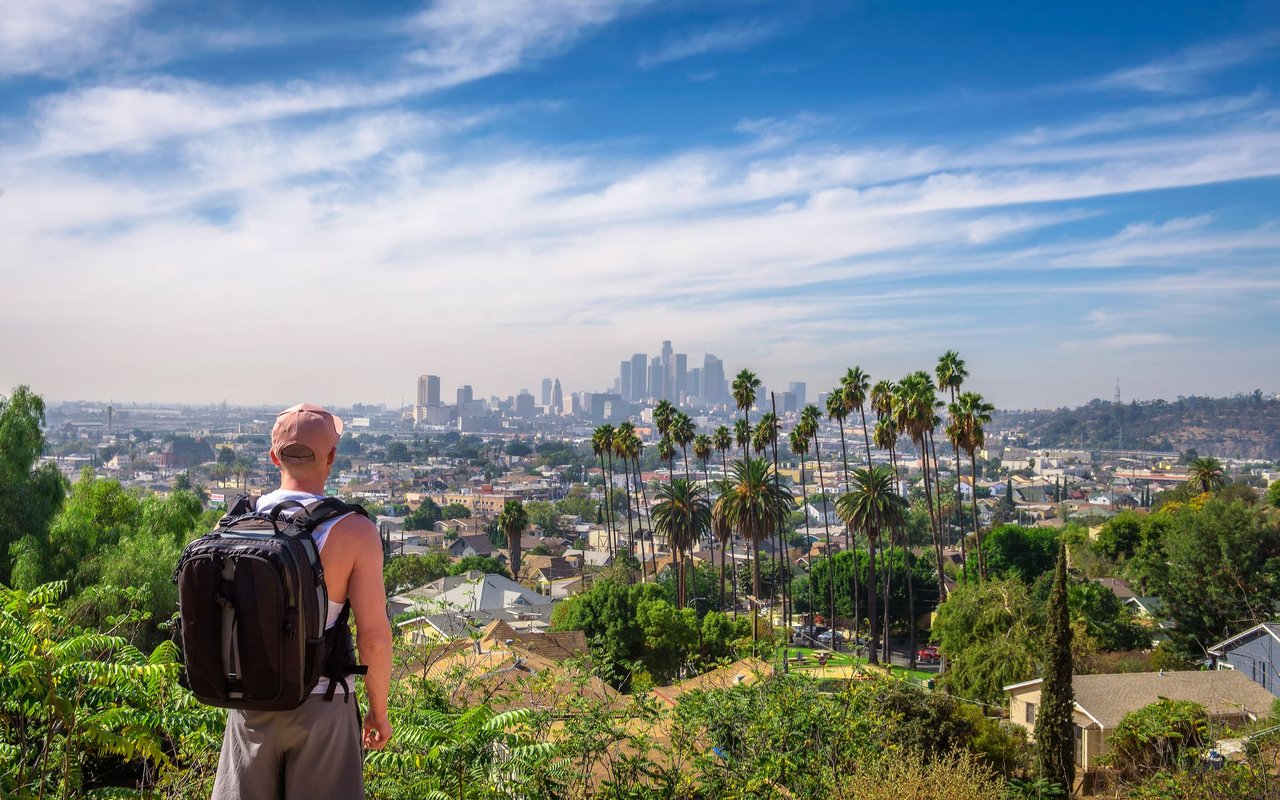
The Reservoir Loop itself is 2.2 miles of paved and dirt path circling the Silver Lake and Ivanhoe basins, and none of what happened at Sunset Row this year changed a single foot of it. The dog park on the south end still runs 6 a.m. to 10 p.m. daily, closed only Wednesday mornings from 6 to 8:30 for maintenance. The three-acre Silver Lake Meadow on the east side has been there since 2011. The Silver Lake Track Club still runs its race around the water, and the Silver Lake Classic still meets at the Meadow every spring, this year on May 17, raising money for the Silver Lake Reservoir Conservancy with a two-mile course and a free kids' 100-meter dash tacked on. None of that required a single new storefront, and none of it needed Sunset Row to keep working.
What Sunset Row did was give the loop's western exit somewhere to go. BAR di Bello, the Milanese-inspired wine bar from Alex Wilmot with partners Michael Kassar of Wexler's Deli, Kristin Olszewski, and Mike Moonves, opened this spring with chef Chris Requena running the kitchen, aperitivo cocktails, and a compact Northern Italian menu. BOBO Thai opened its first United States location a few doors down, built entirely around pad thai, twelve regional versions pulled from family recipes and street stalls, the first American test market for a brand with a following across Asia. Breakfast by Salt's Cure made the opposite move of most restaurants leaving West Hollywood this year, closing that location and opening a new one in Silver Lake instead.
None of these businesses coordinated with each other. What they share is proximity to a walking route thousands of people already use every week on habit, dog walkers on a schedule, runners training for something, the same forty minutes four times a week because it's flat and shaded in patches and five minutes from home. Someone finishing the loop near the western exit is already on foot, already stopped for a leash change, already not far from being hungry. Sunset Row didn't need to create that demand. It needed to be close enough to catch it.
That's maybe fifteen extra minutes added to a walk that used to end in a parking spot. For a neighborhood built around routine, that's not a small change. It's the difference between a loop that returns you to your car and one that returns you to your evening, with a glass of something at BAR di Bello or a plate of pad thai at BOBO Thai before you head home.
The loudest thing to happen in Silver Lake this year drew a global press cycle and closed itself off from almost everyone who lives here. The quieter thing, an old body shop a few blocks off the water slowly filling in with a shoe store, a wine bar, and a shop selling Danish fish sauce, is the one that's still there for you to walk into on a Tuesday.
If you're curious how the rest of the neighborhood's housing stock reflects that same pattern of old buildings finding new uses, or you're thinking about what a move into Silver Lake actually looks like once you know the neighborhood this well, Maureen Pearson has spent a career watching this stretch of Los Angeles change one building at a time. Let's Connect.